Cross-Cultural Communication

Former Position: Instructor (Spring 2025 Semester)
Former Position: TA for Dr. Deborah Tannen (Fall 2024 Semester)
Description: This course explores the nature of cross-cultural communication from the perspective of interactional sociolinguistics. We take a broad view of “culture”, which includes geographic region, ethnicity, age, socioeconomic class, and gender. We examine the relationship between language and culture by investigating aspects of language use that vary by culture, including turn-taking, specific speech acts, silence, politeness, and nonverbal cues. We also examine communication in institutional contexts, including education, business, law, and medicine.
Intro to Linguistics
Current Position: Course Coordinator (Fall 2026 Semester)
Former Position: TA/Recitation Leader (Spring 2024 Semester)
Description: This course provides students with a general introduction to the scientific study of language. Our main goals included familiarizing students with linguistic terminology, teaching both the methods of linguistic analysis and how to apply them (to English and to other languages). We also discussed theories and research on how both first and other languages are learned by children and adults, and encourage students to think about the social implications of language use.

The Discourse of Social Media
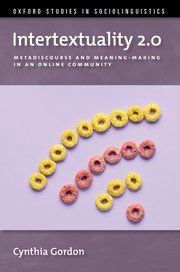
Former Position: TA for Dr. Cynthia Gordon (Fall 2025 Semester)
Description: This course explores the the discourse of social media and other computer-mediated interactions. We use the qualitative theories and methods of digital discourse analysis to examine the structure and use of language in electronic social media (and other forms of digital communication). We also consider multimodal aspects of communication, such as emojis and GIFs. We learn about key concepts and theoretical frameworks of discourse analysis, we survey prior research on digital interaction, and students conduct original research by gathering and analyzing naturally-occurring discourse in one or more of these digital contexts.
Language & Food
Former Position: TA for Dr. Cynthia Gordon (Spring 2025 Semester)
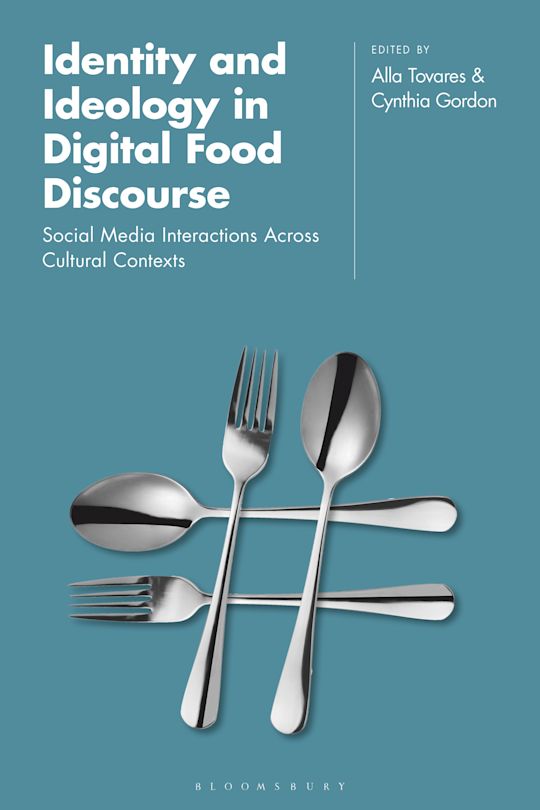
Description: Food and language are omnipresent in everyday life. We use language to talk about food, and food terms have rich cultural histories. Food is a necessity and a luxury; it is intertwined with identities (e.g., cultural, gendered, socioeconomic), relationships (e.g., parent-child, friend-friend), and values (e.g., healthy eating, ethical eating), all of which are negotiated through language. In this course, we apply theoretical concepts to various data types, including restaurant menus, recipes, mealtime talk among friends and family, food-related online discussion forums, social media posts about food, food advertisements, and reality TV shows about food.
An Introduction to Linguistic Diversity
During my time at the USC, I worked closely with the writing department, and I noticed that several of the writing faculty would sometimes comment concerning things about certain students’ writing abilities, particularly students from nonstandard language backgrounds or from non-English language backgrounds, saying things like,
“I just can’t ever get these kids to learn how to write properly!”
or
“I wish I knew how to better communicate with international students because they are always falling behind in class.”
All of these issues being raised were directly related to linguistics and differences in communication between these students and the faculty grading their papers. I was a newly budding sociolinguist, and I desperately wanted to equip faculty and students with the same kind of linguistically nuanced understanding of language and English dialects that I was learning in my classes to help make the first year writing classroom more welcoming to linguistically diverse students.
To address this issue, I applied for a grant from USC to develop a brand new sociolinguistic writing curriculum that would be adapted for the mandatory first year writing course that all students need to take. Since students were required to take this course to help them adjust to the writing expectations set out by the college, I wanted to ensure two things:
- Students would understand that all ways of speaking are linguistically legitimate and effective for communication.
- Due to societal expectations and pressures, we are required by some institutions to adjust the way we speak to ensure that larger audiences can find our language accessible.
This type of structure allowed me to first equip students and faculty with a linguistically correct view of language, one that recognized the inherent diversity and variety of languages and dialects and why this is important, and then to explain why certain contexts require different linguistic norms.
At its core, this type of linguistically inclusive pedagogy stresses the importance of language negotiation, a term which encourages an ongoing conversation about why and how to use a specific kind of language in specific contexts. In this way, instructors would still be actively teaching students about the language they should be adopting in a college setting to better prepare students for the professional world, but they are also allotting time to acknowledge each person’s linguistic competence in their own dialect, thus making the writing classroom a more welcoming and affirming place.
I am deeply proud of this curriculum, and to my knowledge, it is still being used by USC in their first year writing course, and following up from a professor I used to work with, this curriculum served as a type of springboard for them to develop other types of anti-racist pedagogy.

